 made in the USA



Best Wood Species for Unfinished Cabinet Doors
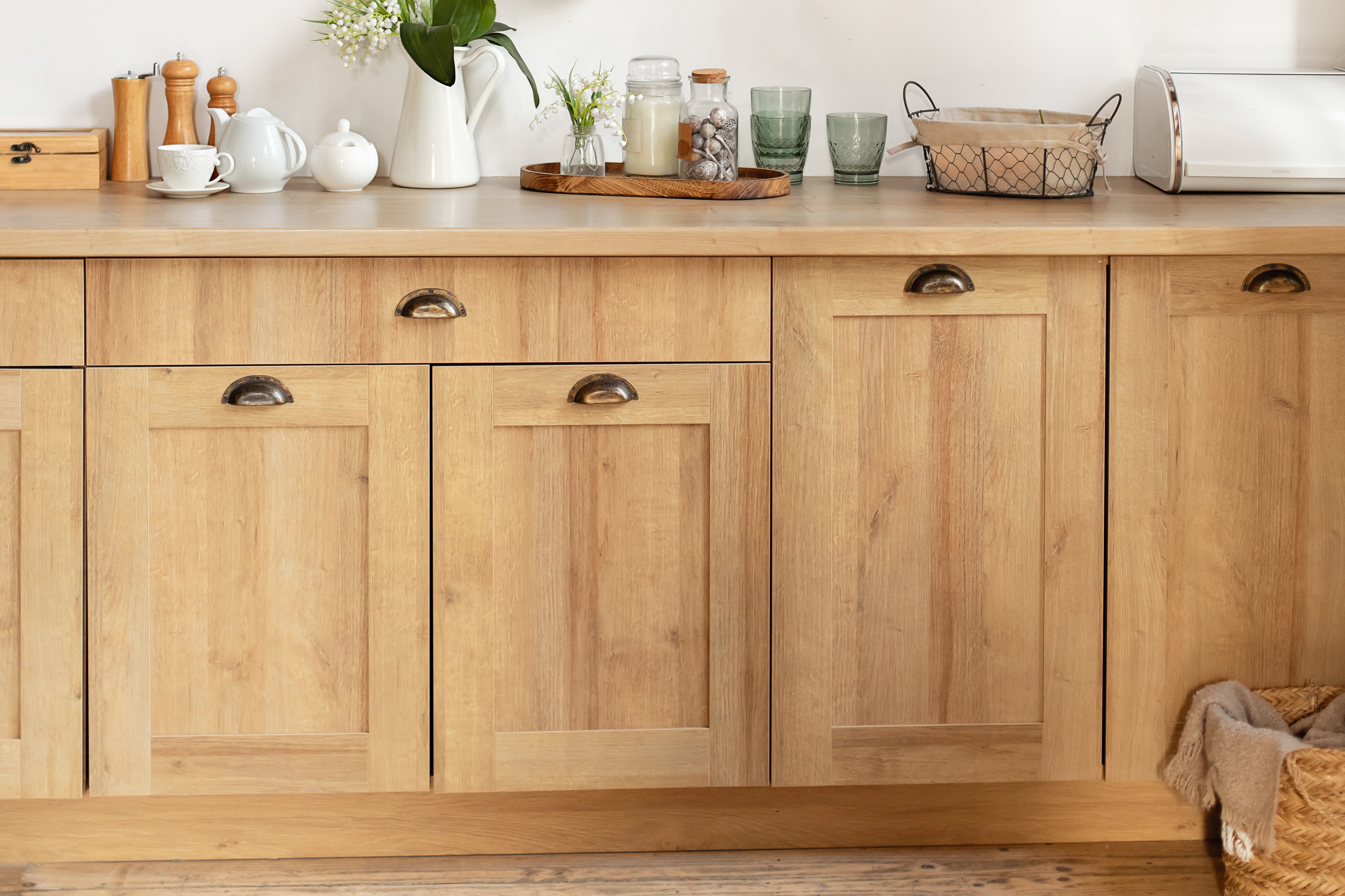
Choosing the best wood species for unfinished cabinet doors is one of the most important decisions in any kitchen or bathroom remodel. While cabinet door style often gets the attention first, the wood species itself determines how durable the cabinet doors will be, how they handle moisture and wear, how the grain appears after finishing, and ultimately how the entire space feels once completed.
Some homeowners want unfinished cabinet doors that can withstand heavy daily use in a busy family kitchen. Others are looking for a luxury natural wood appearance with visible grain and texture. Some want the smoothest possible painted finish, while others want a rustic stained look with warmth and character.
The truth is, there is no single “best” wood species for unfinished cabinet doors. The right option depends on your design style, durability needs, budget, and finish preference.
At CabinetNow, we offer a wide variety of hardwood unfinished cabinet doors because every project is different. Understanding how each wood species performs can help you choose unfinished cabinet doors that not only look beautiful on day one, but continue to perform for years to come.
Table of Contents
Why Hardwood is the Preferred Choice for Unfinished Cabinet Doors
Before choosing unfinished cabinet doors, it's important to understand the difference between hardwood and softwood. While both originate from trees, their density, durability, and long-term performance are dramatically different.
Hardwoods come from slower-growing deciduous trees such as Maple, White Oak, Red Oak, Hickory, Walnut, Cherry, and Alder. Because these trees grow more slowly, the wood develops a denser structure that offers greater durability, dent resistance, and longevity. Softwoods come from faster-growing coniferous trees like Pine, Cedar, Fir, and Spruce. While softwoods can still be attractive for certain woodworking projects, hardwoods are generally preferred for kitchen and bathroom cabinetry because they stand up better to everyday wear and tear.
According to Duffield Timber, hardwoods typically have a denser cellular structure than softwoods, which contributes to their improved strength, durability, and resistance to dents and daily wear. This is one reason hardwood species are commonly used for premium unfinished cabinet doors in kitchens, bathrooms, mudrooms, laundry rooms, and other high-traffic areas.
While hardwoods are generally stronger than softwoods, homeowners often want to know how these differences translate into real-world cabinet performance. The table below highlights the key differences between hardwood and softwood when used for unfinished cabinet doors.
| Category | Hardwood | Softwood |
|---|---|---|
| Tree Type | Comes from deciduous trees that shed their leaves annually. | Comes from coniferous trees that produce cones and needles. |
| Common Species | Maple, White Oak, Red Oak, Hickory, Walnut, Cherry, Alder | Pine, Cedar, Fir, Spruce |
| Growth Rate | Slower-growing trees | Faster-growing trees |
| Density | Typically denser and heavier | Typically lighter and less dense |
| Dent Resistance | Better resistance to dents, dings, and impacts | More susceptible to dents and impressions |
| Scratch Resistance | Generally more resistant to scratches and wear | More prone to surface scratches |
| Moisture Resistance | Typically more stable in kitchens and bathrooms when properly finished | Can be more susceptible to swelling and wear over time |
| Lifespan | Can last decades with proper care and finishing | Generally shorter lifespan in high-traffic applications |
| Cost | Typically more expensive due to slower growth and durability | Usually more affordable and readily available |
| Best Use for Cabinetry | Kitchen cabinets, bathroom vanities, and premium unfinished cabinet doors | Budget cabinetry, rustic projects, and decorative applications |
| Overall Recommendation | Best choice for unfinished cabinet doors due to durability, longevity, dent resistance, and resale value. | Suitable for select projects but generally less durable for high-use kitchen and bathroom cabinetry. |
Although hardwoods are generally more durable than softwoods, not all hardwood species perform the same. Some hardwoods, such as Hickory and Hard Maple, are significantly harder than Cherry or Alder. This is where the Janka Hardness Scale becomes a valuable tool for comparing wood species used in unfinished cabinet doors.
Understanding Janka Hardness Ratings
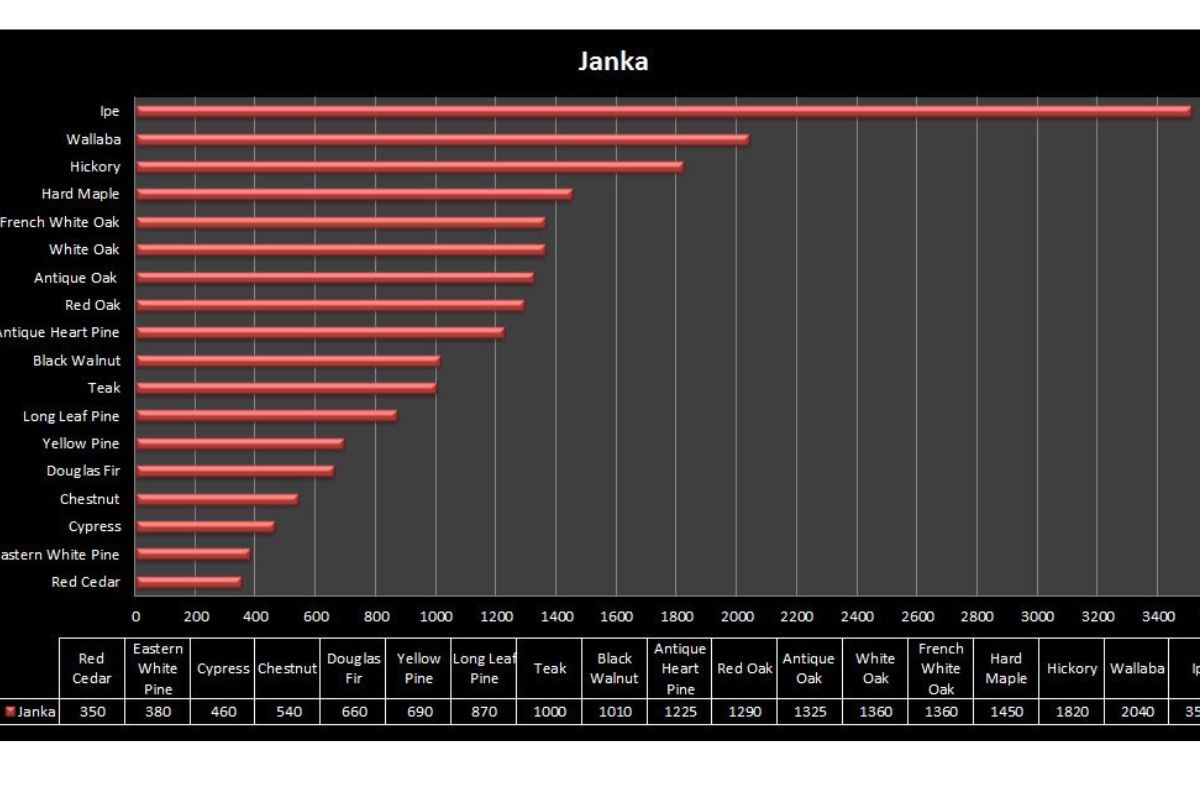
One of the best ways to compare wood durability is through the Janka Hardness Scale. The Janka rating measures how hard and dent-resistant a wood species is. The higher the number, the harder and more durable the wood tends to be.
For unfinished cabinet doors, this matters because harder woods generally resist dents, scratches, surface wear, and everyday impacts.
[source: Woodco.com]
Hickory, for example, ranks extremely high on the Janka scale with a hardness rating of 1820. Meanwhile, Hard Maple ranks at 1450. White Oak follows closely behind at 1360.
This is one reason Maple, White Oak, and Hickory unfinished cabinet doors are often recommended for high-traffic kitchens where durability matters. However, the hardest wood is not always the “best” wood. Softer hardwoods like Cherry and Alder are still extremely popular because of their warmth, texture, and natural appearance.
| Wood Species | Janka Rating | Best For | Grain Style | Durability Level |
|---|---|---|---|---|
| Hickory | 1,820 | Maximum durability, rustic kitchens, high-traffic homes | Dramatic grain with strong color variation | Very High |
| Maple | 1,450 | Painted unfinished cabinet doors, modern kitchens | Smooth, fine, subtle grain | High |
| White Oak | 1,360 | Stained unfinished cabinet doors, organic modern designs | Visible linear grain | High |
| Red Oak | 1,290 | Traditional kitchens, visible wood grain, stained finishes | Bold, open grain with warm undertones | High |
| Walnut | 1,010 | Luxury natural wood cabinetry, clear-coated cabinet doors | Smooth grain with rich dark tones | Medium-High |
| Cherry | 950 | Warm traditional kitchens and natural aging character | Fine, smooth grain with reddish undertones | Medium |
| Alder | 590 | Rustic, farmhouse, and softer natural cabinet designs | Soft, warm, natural grain | Medium-Low |
6 Best Wood Species for Unfinished Cabinet Doors
Choosing the right wood species for unfinished cabinet doors comes down to balancing durability, appearance, grain texture, finish goals, and budget. Below are some of the best hardwood options for unfinished cabinet doors and what makes each one unique.
1. Maple Unfinished Cabinet Doors
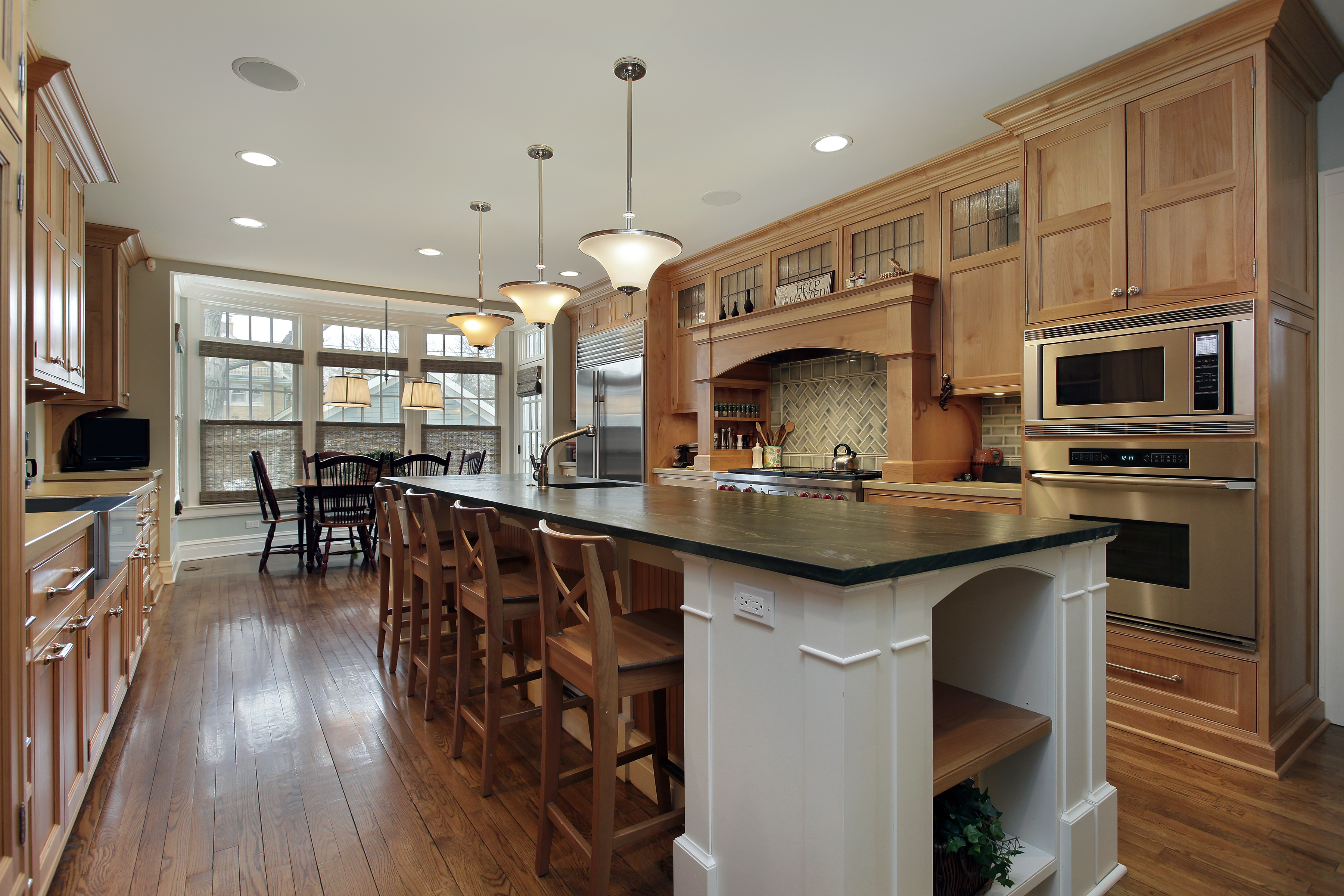
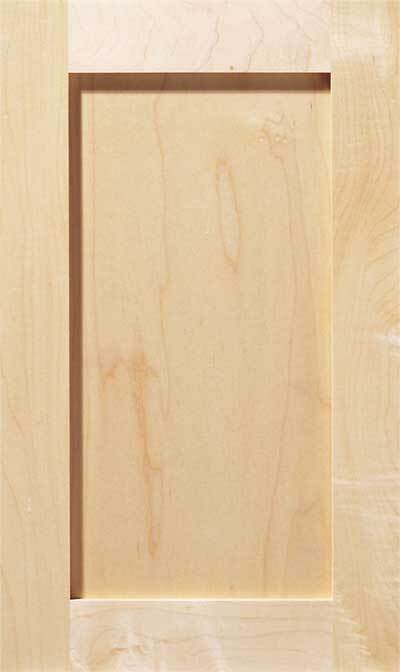
Maple unfinished cabinet doors are one of the most popular choices for homeowners, designers, and contractors because they offer an excellent balance of durability, versatility, and value. As a dense hardwood with a smooth, fine-grain pattern, Maple performs exceptionally well in both painted and stained applications.
One of Maple's biggest advantages is its subtle grain texture. Unlike Oak or Hickory, which have more pronounced grain patterns, Maple creates a cleaner and more refined appearance. This makes Maple unfinished cabinet doors especially popular in modern kitchens, transitional spaces, contemporary bathrooms, and slim shaker cabinet designs.
| Maple at a Glance | Details |
|---|---|
| Janka Hardness Rating | 1,450 |
| Grain Pattern | Fine, smooth, and consistent |
| Paint Performance | Excellent |
| Stain Performance | Very Good |
| Dent Resistance | High |
| Best Design Styles | Modern, Transitional, Contemporary, Minimalist |
| Ideal For | Painted or stained unfinished cabinet doors |
Available Maple Grades for Unfinished Cabinet Doors
At CabinetNow, Maple unfinished cabinet doors are commonly available in several grades depending on the desired appearance and finish.
| Maple Grade | Best Use | Appearance |
|---|---|---|
| Maple Natural | Stained unfinished cabinet doors | More natural color variation, mineral streaks, and character |
| Maple Select | Premium stained or clear-coated cabinet doors | More consistent grain and color appearance |
| Maple Paint Grade | Painted unfinished cabinet doors | Maple hardwood frame with MDF center panel for a smooth painted finish |
For homeowners planning to paint their unfinished cabinet doors, Maple Paint Grade is often the best overall value. The combination of a Maple hardwood frame and MDF center panel creates a furniture-quality painted finish while helping minimize wood movement, grain telegraphing, and paint cracking over time.
Why Homeowners Choose Maple Unfinished Cabinet Doors:
- Excellent durability and dent resistance
- Smooth grain that works exceptionally well with paint
- Available in multiple grades for different budgets and design goals
- Versatile enough for both modern and traditional cabinetry
- One of the most widely used hardwoods for kitchen and bathroom cabinets
Best For: Homeowners looking for durable unfinished cabinet doors that can be painted or stained while maintaining a clean, timeless appearance.
2. White Oak Unfinished Cabinet Doors
[source: Jenna Kate At Home]
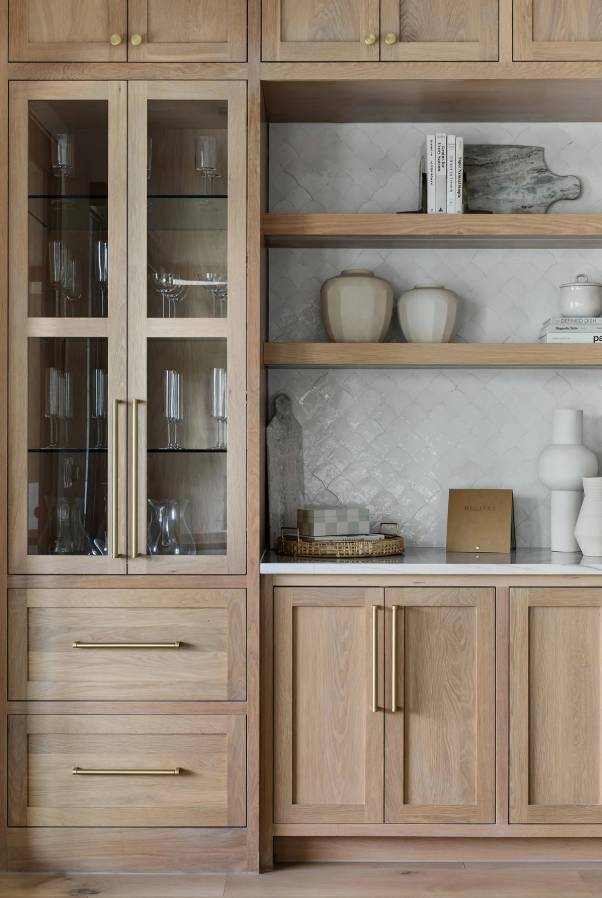
White Oak unfinished cabinet doors have become one of the most sought-after options in modern kitchen design. While Oak has been used in cabinetry for generations, White Oak has experienced a resurgence thanks to the popularity of organic modern, Scandinavian, Japandi, and luxury custom kitchen designs.
Unlike Maple, which has a smoother and more subtle grain pattern, White Oak features visible linear grain that adds warmth, texture, and character to cabinetry. It also offers an excellent balance of beauty and durability, making it one of the best wood species for homeowners who want unfinished cabinet doors that will stand up to daily use while showcasing the natural beauty of real wood.
White Oak unfinished cabinet doors are especially popular in:
- Organic modern kitchens
- Scandinavian interiors
- Japandi-inspired spaces
- Luxury custom homes
- Modern bathroom vanities
- Natural wood kitchen designs
| White Oak at a Glance | Details |
|---|---|
| Janka Hardness Rating | 1,360 |
| Grain Pattern | Visible, linear, and highly textured |
| Paint Performance | Good, but grain remains visible |
| Stain Performance | Excellent |
| Dent Resistance | High |
| Best Design Styles | Organic Modern, Scandinavian, Japandi, Contemporary |
| Ideal For | Natural, stained, or clear-coated unfinished cabinet doors |
Available White Oak Grades for Unfinished Cabinet Doors
White Oak unfinished cabinet doors are available in multiple grades and cuts, each creating a different visual effect. Choosing the right option depends on how much grain variation and texture you want to showcase.
| White Oak Option | Best Use | Appearance |
|---|---|---|
| White Oak Select | Premium stained cabinet doors | Consistent grain with fewer natural imperfections |
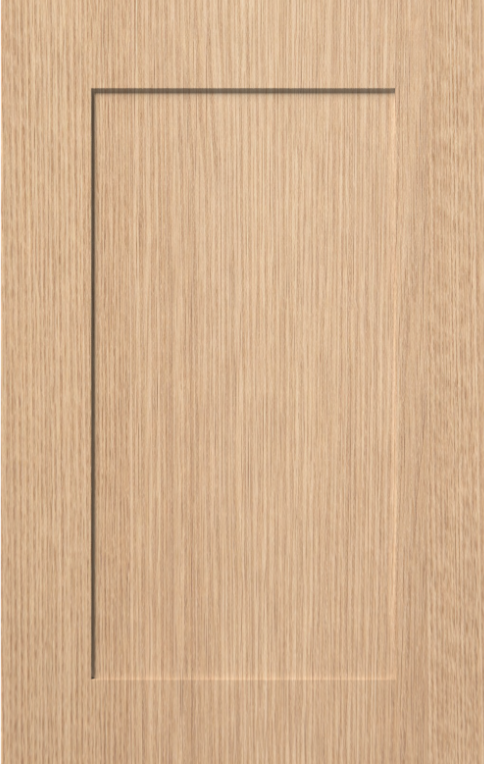
| Rift White Oak | Modern and luxury cabinetry | Straight, uniform grain with a clean architectural appearance |
Among today's designers, Rift White Oak unfinished cabinet doors are often considered the premium choice for modern kitchens. The unique cutting method produces long, straight grain lines that create a sophisticated and contemporary appearance. This is one reason Rift White Oak is commonly found in high-end custom homes and luxury kitchen projects.
Why Homeowners Choose White Oak Unfinished Cabinet Doors:
- Excellent durability and dent resistance
- Beautiful natural grain texture
- Takes stain exceptionally well
- Works perfectly with clear coats and natural finishes
- One of the most popular wood species in modern kitchen design
- Available in both Select and Rift White Oak options
Best For: Homeowners looking for unfinished cabinet doors with visible natural grain, exceptional durability, and a high-end designer appearance.
3. Red Oak Unfinished Cabinet Doors
Red Oak unfinished cabinet doors have been a staple in American cabinetry for decades because they offer a strong balance of durability, affordability, and classic wood character. If you want cabinet doors with visible grain, warm undertones, and excellent stain potential, Red Oak is one of the most reliable hardwood options to consider.
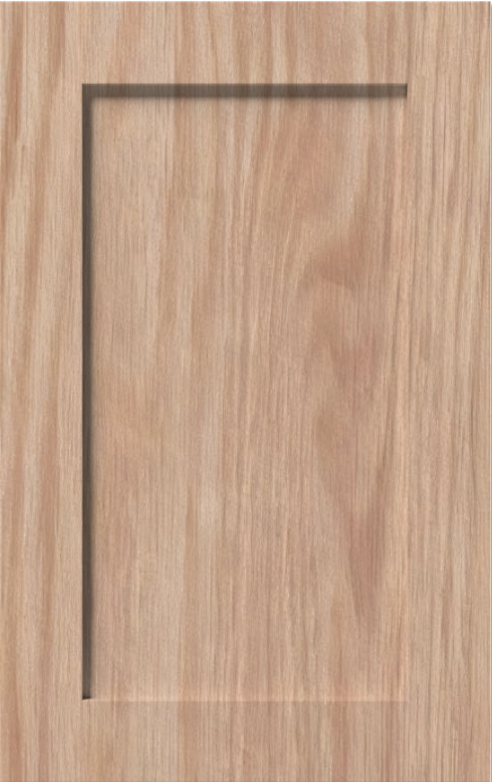
Compared to White Oak, Red Oak has a more pronounced grain pattern and warmer reddish undertones. This gives Red Oak unfinished cabinet doors a more traditional, rustic, or craftsman-style appearance. The open grain structure also allows stain to penetrate deeply into the wood, creating rich color variation and highlighting the natural texture of the cabinet doors.
This makes Red Oak especially useful for homeowners who want unfinished cabinet doors they can stain themselves or have professionally finished for a medium, dark, rustic, or traditional wood look.
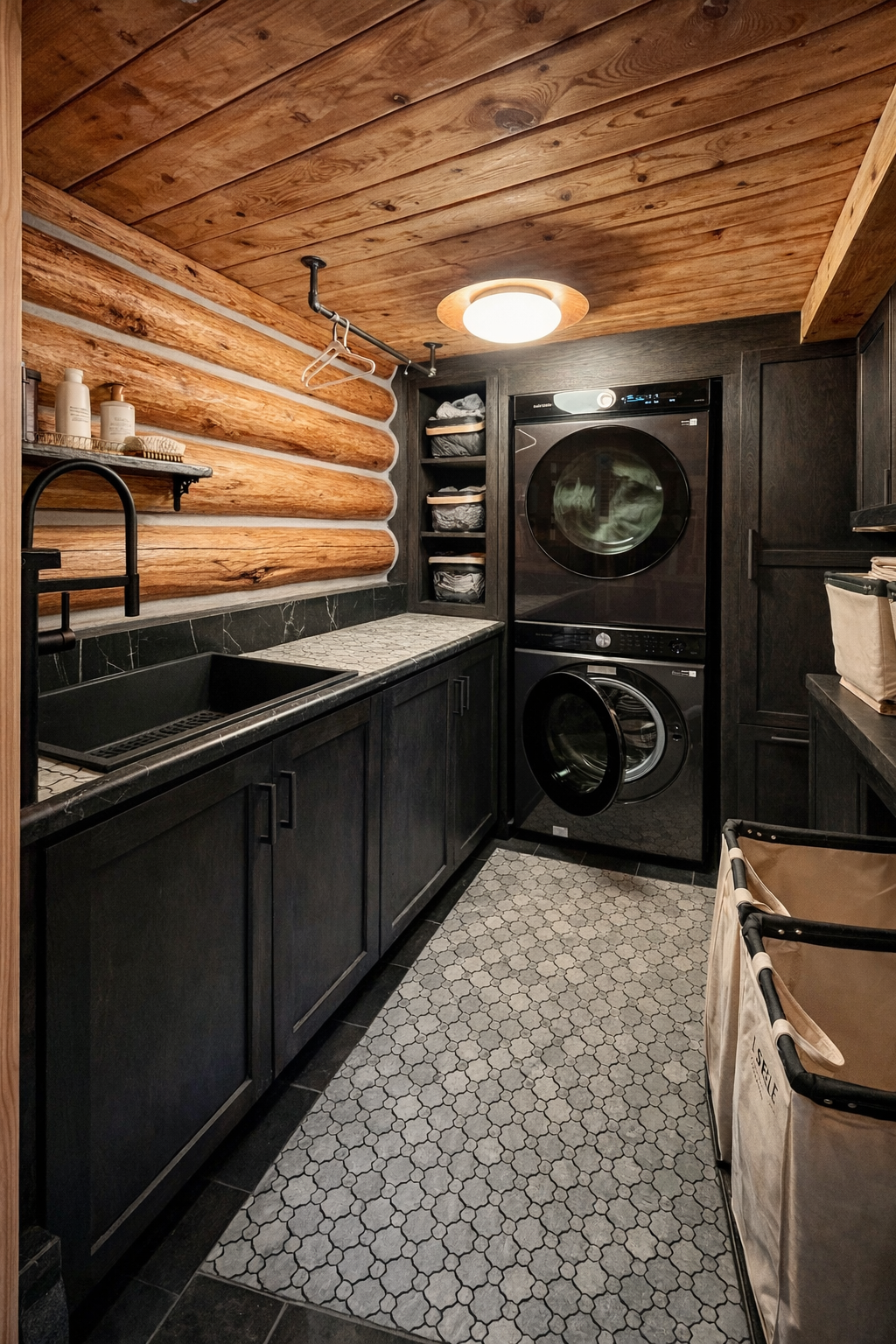
This CabinetNow customer project features stained Red Oak Select Shaker cabinet doors in a custom laundry room built-in. The stain enhances Red Oak's bold grain pattern and warm natural undertones, creating a rustic yet refined look.
Project: Jackson, WY Contractor Designs Rustic Modern Laundry Room Built-Ins
| Red Oak at a Glance | Details |
|---|---|
| Janka Hardness Rating | 1,290 |
| Grain Pattern | Bold, open grain with strong natural texture |
| Paint Performance | Fair; the grain usually remains visible beneath paint |
| Stain Performance | Excellent; ideal for medium, dark, rustic, and traditional stain colors |
| Dent Resistance | High |
| Natural Undertones | Warm reddish-brown tones |
| Best Design Styles | Traditional, Craftsman, Farmhouse, Rustic, Transitional |
| Ideal For | Stained unfinished cabinet doors with visible wood grain |
Red Oak vs. White Oak for Unfinished Cabinet Doors
Many homeowners compare Red Oak and White Oak when choosing unfinished cabinet doors. Both are durable hardwoods, but they create very different design results. Red Oak is usually the better choice for a warmer, more traditional look, while White Oak is often preferred for cleaner, modern, and organic-style cabinetry.
| Feature | Red Oak | White Oak |
|---|---|---|
| Grain Visibility | More pronounced, open, and dramatic | More subtle, linear, and refined |
| Color Tone | Warmer with reddish undertones | More neutral with light brown or beige undertones |
| Design Style | Traditional, rustic, craftsman, farmhouse | Modern, organic modern, Scandinavian, Japandi |
| Stain Appearance | Bold contrast with visible texture | Softer, cleaner, and more uniform |
Why Homeowners Choose Red Oak Unfinished Cabinet Doors:
- Strong durability at an approachable price point
- Beautiful visible grain pattern
- Excellent stain absorption
- Classic American cabinetry appearance
- Works well in traditional, rustic, craftsman, and farmhouse spaces
- One of the best hardwood options for showcasing natural wood texture
Best For: Homeowners looking for durable unfinished cabinet doors with bold grain patterns, rich stained finishes, and timeless traditional appeal.
4. Hickory Unfinished Cabinet Doors
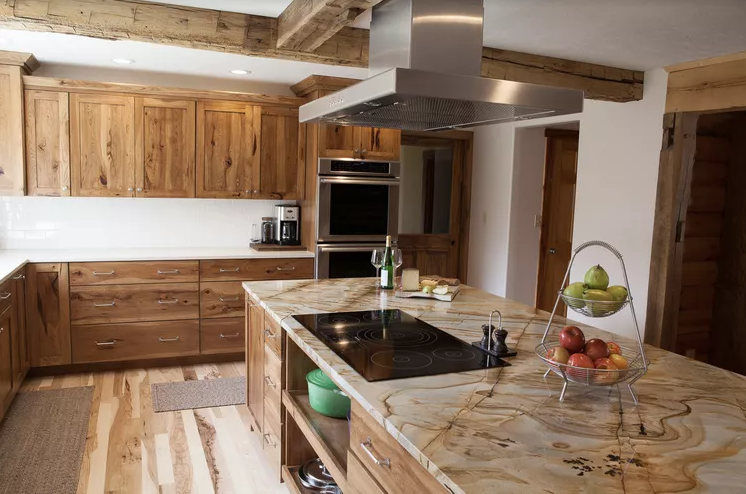
If durability is your top priority, Hickory unfinished cabinet doors are hard to beat. Hickory is one of the hardest domestic hardwoods commonly used in cabinetry, making it an excellent choice for busy kitchens, bathrooms, mudrooms, and other high-traffic spaces where cabinet doors are exposed to everyday wear and tear.
[source: Haste Woodcraft]
With a Janka hardness rating of 1,820, Hickory ranks significantly higher than Maple, White Oak, Red Oak, Walnut, and Cherry. This exceptional hardness helps Hickory unfinished cabinet doors resist dents, scratches, and impacts that can occur over years of daily use.
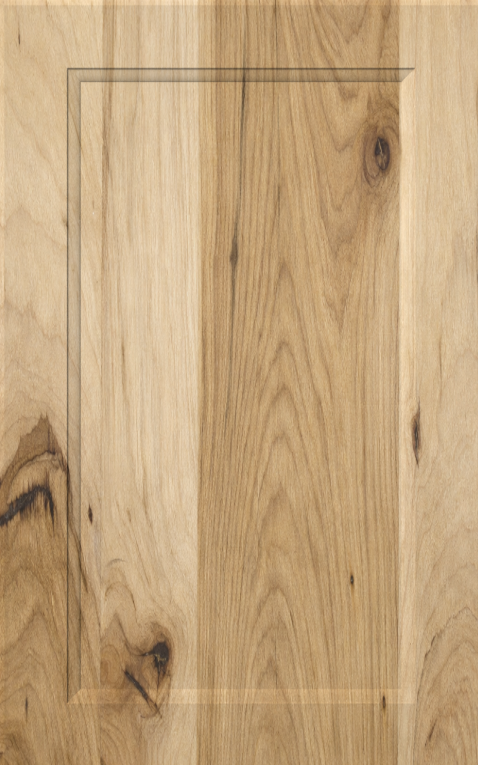
Beyond durability, Hickory is known for its dramatic natural character. Unlike Maple or White Oak, which tend to have more uniform grain patterns, Hickory often displays strong grain movement, natural color variation, and striking contrast between lighter sapwood and darker heartwood. No two Hickory unfinished cabinet doors look exactly alike, giving cabinetry a unique, custom-crafted appearance.
Hickory unfinished cabinet doors are especially popular in:
- Farmhouse kitchens
- Rustic homes and cabins
- Mountain and lodge-style interiors
- Craftsman-inspired designs
- High-traffic family kitchens
- Homes where durability is the top priority
| Hickory at a Glance | Details |
|---|---|
| Janka Hardness Rating | 1,820 |
| Grain Pattern | Bold with heavy movement and variation |
| Paint Performance | Poor to Fair; strong grain remains highly visible |
| Stain Performance | Excellent |
| Dent Resistance | Very High |
| Natural Appearance | Strong color variation between heartwood and sapwood |
| Best Design Styles | Rustic, Farmhouse, Cabin, Craftsman, Lodge |
| Ideal For | Homeowners prioritizing durability and natural wood character |
What Makes Hickory Different?
Most hardwoods have relatively consistent color and grain patterns. Hickory is different. The wood naturally contains a greater range of color variation, often blending creamy whites, light tans, golden browns, and darker brown streaks within the same cabinet door. This dramatic contrast is one of the reasons Hickory unfinished cabinet doors are so popular in rustic and farmhouse cabinetry.
Because of this natural variation, Hickory is usually selected for stained or clear-coated finishes rather than paint. Most homeowners choose Hickory specifically because they want to showcase the wood's character rather than hide it.
Why Homeowners Choose Hickory Unfinished Cabinet Doors:
- One of the hardest domestic hardwoods available
- Exceptional dent and scratch resistance
- Highly distinctive grain pattern
- Natural rustic character and color variation
- Excellent long-term durability
- Creates a unique custom appearance that cannot be replicated with more uniform woods
Best For: Homeowners looking for unfinished cabinet doors that maximize durability while showcasing bold grain patterns, natural color variation, and rustic character.
5. Walnut Unfinished Cabinet Doors
[source: Grace in my Space]
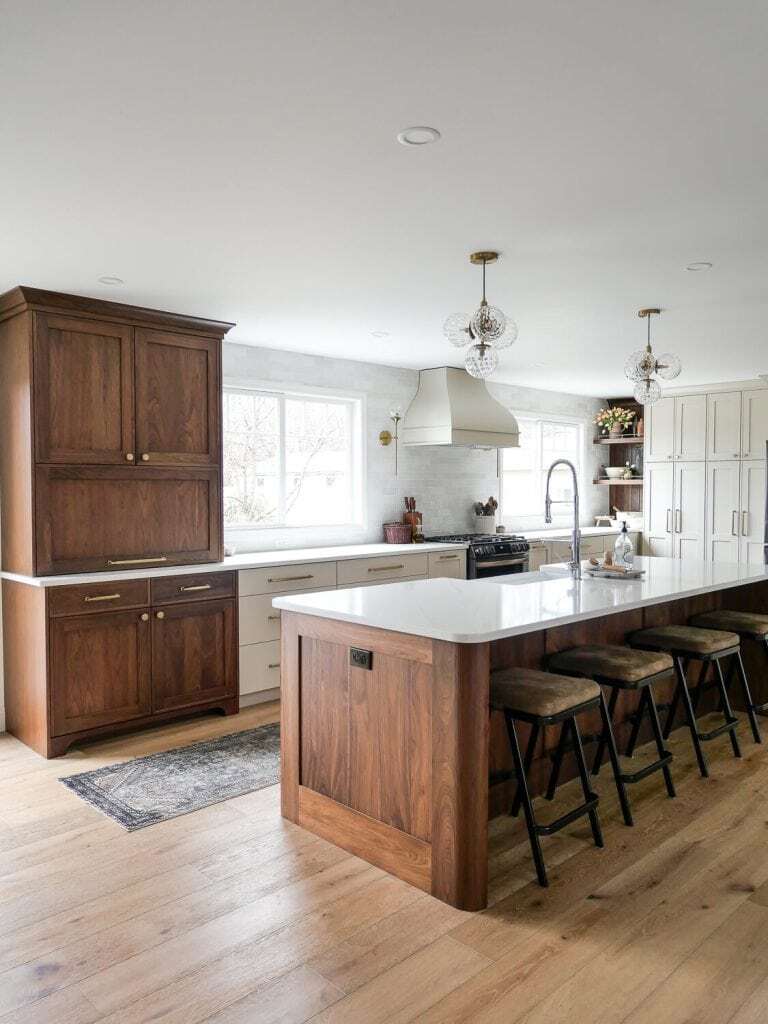
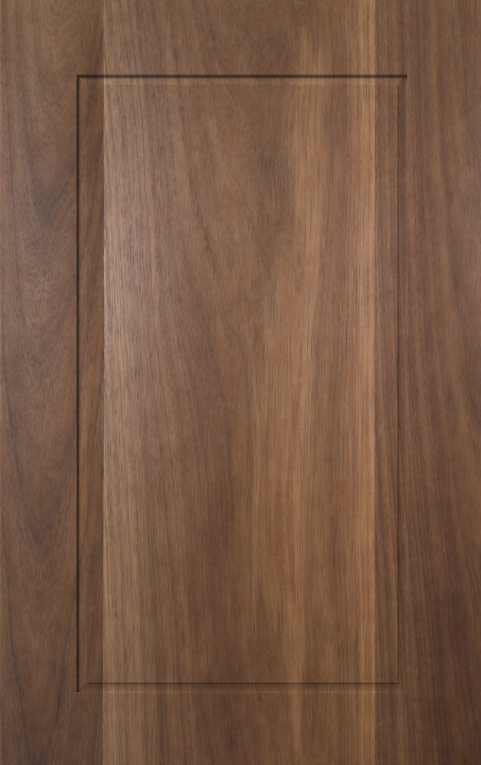
Walnut unfinished cabinet doors are widely considered one of the most premium and sought-after options in custom cabinetry. Unlike Maple, Oak, or Hickory, which are often stained to achieve a richer appearance, Walnut naturally contains deep chocolate brown tones, elegant grain movement, and color variation that give it a luxurious look straight from the lumber mill.
Because Walnut already possesses significant natural character, many designers prefer to finish Walnut unfinished cabinet doors with a clear coat rather than a stain. This allows the wood's rich coloration and unique grain patterns to remain the focal point of the design.
Walnut unfinished cabinet doors have become especially popular in:
- Mid-century modern kitchens
- Luxury contemporary homes
- Modern flat-panel cabinetry
- High-end custom built-ins
- Statement bathroom vanities
- Designer office and entertainment spaces
| Walnut at a Glance | Details |
|---|---|
| Janka Hardness Rating | 1,010 |
| Grain Pattern | Smooth with flowing natural movement |
| Paint Performance | Not recommended; typically chosen for its natural beauty |
| Stain Performance | Good, though often unnecessary |
| Dent Resistance | Medium-High |
| Natural Color | Rich chocolate brown with darker streaking |
| Best Design Styles | Mid-Century Modern, Contemporary, Luxury Modern |
| Ideal For | Natural or clear-coated unfinished cabinet doors |
Why Designers Love Walnut
Few wood species make a statement quite like Walnut. Its naturally dark color creates contrast and warmth without relying on paint or heavy stain. Walnut pairs exceptionally well with white countertops, black fixtures, brass hardware, and minimalist cabinet designs, making it a favorite among interior designers and architects.
Walnut is also one of the most popular species for slab cabinet doors and modern cabinetry because its flowing grain pattern becomes a design feature rather than simply a material choice. When finished with a clear coat, Walnut develops even greater depth and richness over time.
Why Homeowners Choose Walnut Unfinished Cabinet Doors:
- Rich natural color without the need for stain
- Luxury appearance and timeless appeal
- Beautiful grain movement and variation
- Popular in modern and contemporary designs
- Pairs well with premium finishes and hardware
- Ages beautifully with proper finishing and care
Best For: Homeowners seeking premium unfinished cabinet doors with natural warmth, sophisticated grain patterns, and a luxury custom cabinetry appearance.
6. Cherry Unfinished Cabinet Doors
Cherry unfinished cabinet doors have been prized by cabinetmakers for generations because of their warmth, elegance, and ability to age beautifully over time. Unlike many wood species that maintain a relatively consistent appearance throughout their lifespan, Cherry develops a richer and deeper color as it is exposed to natural and artificial light.
This natural aging process, known as patina development, is one of the reasons Cherry remains a favorite for high-end cabinetry. Over the years, Cherry unfinished cabinet doors gradually darken from a light reddish-brown color to a deeper, richer tone, creating a timeless appearance that many homeowners find highly desirable.
Cherry also features a fine, smooth grain pattern that gives cabinetry a refined and sophisticated look. Compared to Oak or Hickory, Cherry offers a more subtle grain texture, making it ideal for homeowners seeking warmth and elegance without dramatic grain movement.
Cherry unfinished cabinet doors are especially popular in:
- Traditional kitchens
- Luxury classic interiors
- Transitional homes
- Custom furniture-inspired cabinetry
- Built-in libraries and home offices
- High-end bathroom vanities
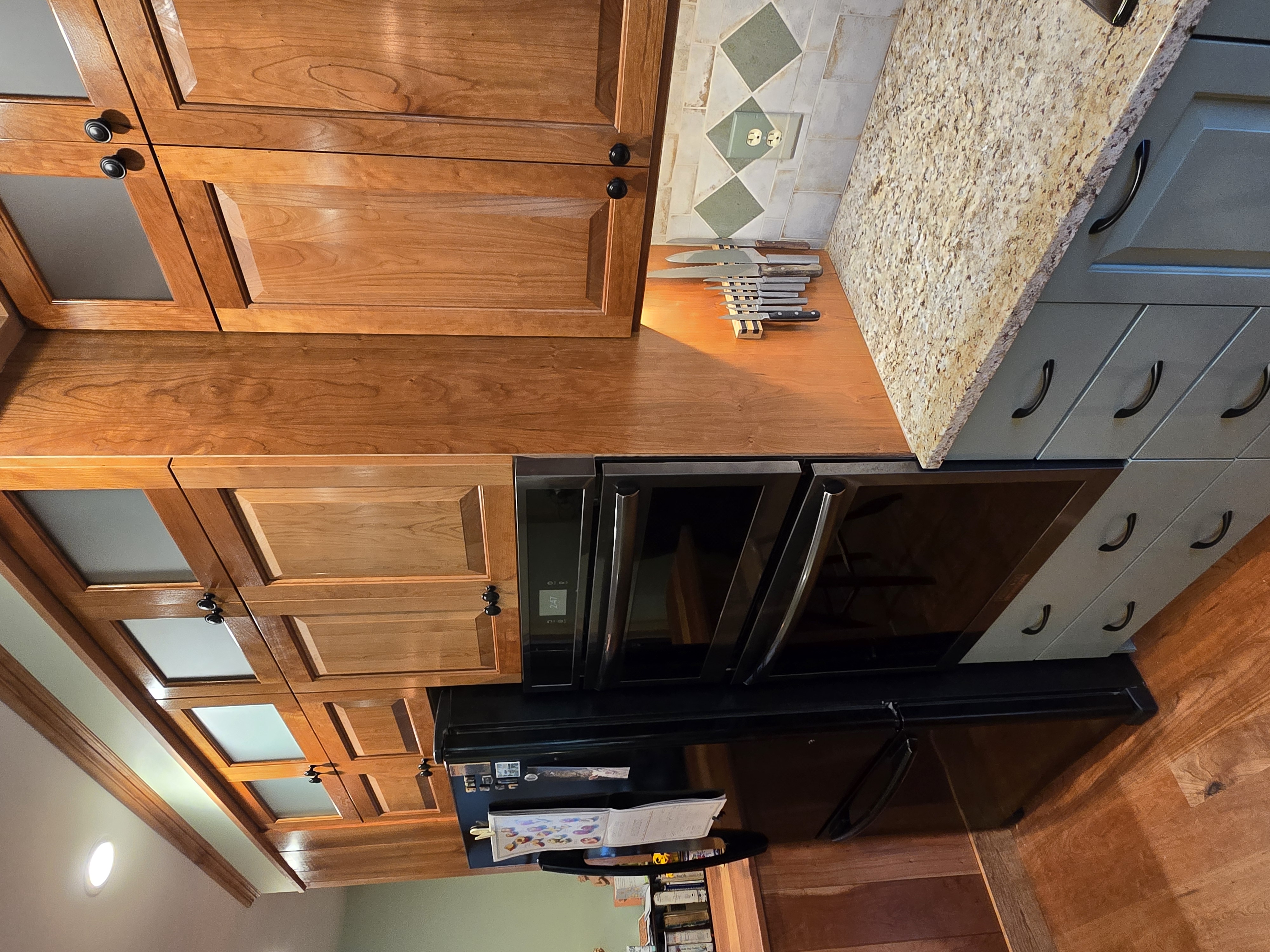
This custom New Hampshire kitchen features Cherry Select cabinet doors that showcase the wood's naturally rich grain pattern and warm reddish-brown tones. One of Cherry's most desirable qualities is its ability to develop a deeper, richer patina over time, creating cabinetry that becomes even more beautiful with age.
Project Source: A Tradesman's Expertise Transforms This Cherry Wood Kitchen in New Hampshire
| Cherry at a Glance | Details |
|---|---|
| Janka Hardness Rating | 950 |
| Grain Pattern | Fine, smooth, and uniform |
| Paint Performance | Good, though rarely painted due to its natural beauty |
| Stain Performance | Excellent |
| Dent Resistance | Medium |
| Natural Color | Warm reddish-brown tones |
| Unique Characteristic | Develops a richer patina as it ages |
| Best Design Styles | Traditional, Transitional, Classic Luxury |
| Ideal For | Warm, elegant unfinished cabinet doors that improve with age |
What Makes Cherry Different?
Unlike most hardwoods, Cherry becomes more beautiful over time. Exposure to sunlight and everyday use gradually deepens the wood's color, creating a rich patina that cannot be replicated with stain alone. Many homeowners specifically choose Cherry unfinished cabinet doors because they appreciate this natural aging process and the character it adds to their home.
Because Cherry already has warm undertones and an elegant grain pattern, many designers recommend clear coats or light stains that allow the wood's natural beauty to remain visible. While Walnut is often associated with modern luxury, Cherry remains one of the premier wood species for traditional and transitional cabinetry where warmth and timeless craftsmanship are desired.
Why Homeowners Choose Cherry Unfinished Cabinet Doors:
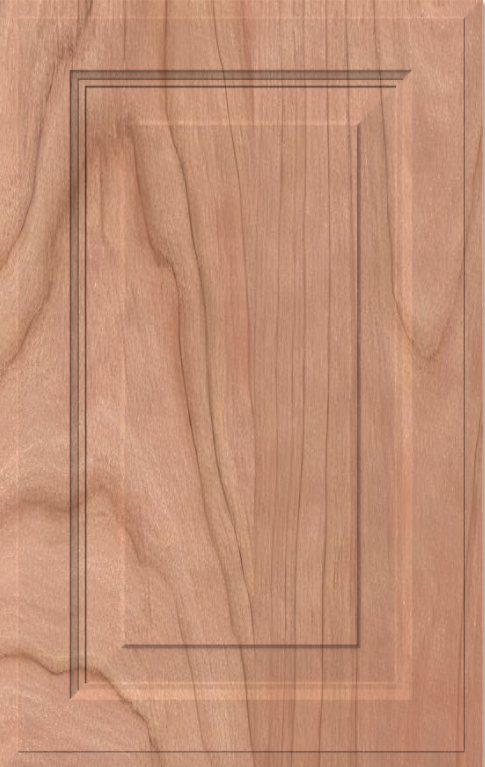
- Develops a beautiful natural patina over time
- Warm, inviting appearance
- Fine and elegant grain pattern
- Timeless traditional appeal
- Excellent stain compatibility
- Popular in luxury custom cabinetry and furniture-quality projects
Best For: Homeowners looking for unfinished cabinet doors with timeless warmth, refined grain patterns, and a natural aging process that enhances the beauty of their cabinetry for years to come.
Choosing the Best Wood Species for Unfinished Cabinet Doors
The best wood species for unfinished cabinet doors depends on the look you want to achieve, how much durability you need, and whether you plan to paint, stain, or clear coat your cabinetry.
After comparing the most popular hardwood options, here's a quick way to narrow down your decision:
- Maple Paint Grade → Best for painted unfinished cabinet doors with a smooth, furniture-quality finish.
- White Oak Select or Rift White Oak → Best for modern kitchens, organic interiors, and natural wood designs.
- Red Oak Select → Best for traditional cabinetry with bold grain patterns and excellent stain absorption.
- Hickory → Best for maximum durability, rustic character, and high-traffic kitchens.
- Walnut Select → Best for luxury custom cabinetry with rich natural color and timeless sophistication.
- Cherry Select → Best for homeowners seeking warmth, elegance, and a wood species that becomes more beautiful with age.
Ultimately, the right unfinished cabinet doors balance durability, grain visibility, finish preferences, design style, budget, and long-term performance. While every hardwood offers unique advantages, choosing a species that complements both your lifestyle and your home's aesthetic will ensure you enjoy your cabinetry for years to come.
At CabinetNow, we manufacture custom-sized unfinished cabinet doors in a wide variety of wood species, allowing homeowners, designers, and contractors to create cabinetry that is truly their own.
Ready to Start Your Project?
Whether you're replacing cabinet doors, refacing an existing kitchen, updating a bathroom vanity, or building custom cabinetry from scratch, our team can help you choose the right wood species, door style, and construction options for your project.
Shop by Wood Species:
- Shop Maple Unfinished Cabinet Doors
- Shop White Oak Unfinished Cabinet Doors
- Shop Red Oak Unfinished Cabinet Doors
- Shop Hickory Unfinished Cabinet Doors
- Shop Walnut Unfinished Cabinet Doors
- Shop Cherry Unfinished Cabinet Doors
If you're not sure which wood species is right for your project, request a free quote and our team will help you compare options based on your design goals, finish preferences, and budget.