 made in the USA




Made to Spec vs. Made to Stock: Why a 1/16-Inch Tolerance Matters When You're Behind Schedule
When a cabinet package is late, the schedule does not wait politely.
The flooring crew is booked. The countertop template is waiting. The appliances are staged. The owner is asking for updates. The punch list is growing before the install even starts.
That is when cabinet sizing stops being a design detail and becomes a jobsite problem.
Stock cabinets can work when the layout is simple, the dimensions are forgiving, and the schedule has room for adjustment. But when you are behind schedule, waiting on replacements, filling in missing components, or trying to keep an install date alive, “standard size” can become the slowest option on the job.
The difference is simple:
Made to stock means the job has to adapt to the cabinet.
Made to spec means the cabinet is built to the job.
That difference matters most when the tolerance is tight. At CabinetNow, eligible QuickShip cabinet boxes, doors, and drawer boxes are built to your specifications and manufactured to a 1/16-inch tolerance for accurate fit and installation.
When you are already behind, that precision is not just a quality claim. It is schedule protection.
What “Made to Stock” Really Costs in the Field
Made-to-stock cabinets are built around predetermined sizes. That model works because inventory can be produced in repeatable dimensions. But the field rarely gives you perfect repeatable conditions.
Walls bow. Openings vary. Older buildings are out of square. Multifamily units that look identical on plan can measure differently in the field. Mechanical, plumbing, and electrical conditions rarely land exactly where the drawings hoped they would.
With stock sizing, the installer often has to solve those issues on site.
That can mean:
- Extra fillers
- Extra scribe work
- Shimming and re-leveling
- On-site trimming
- Modified toe kicks
- Adjusted reveals
- Recut panels
- Reordered parts
- Delayed countertop templates
- Return trips after other trades move forward
None of those tasks looks catastrophic by itself. But they add up fast.
A half hour here, two hours there, a missing panel, a bad reveal, a drawer box that does not clear the hardware, a filler that makes the run look patched instead of planned, that is how a cabinet delay becomes a multi-day jobsite recovery problem.
When the schedule is already blown, the fastest cabinet is not always the one sitting in a warehouse. The fastest cabinet is the one that fits when it arrives.
Why 1/16-Inch Tolerance Matters
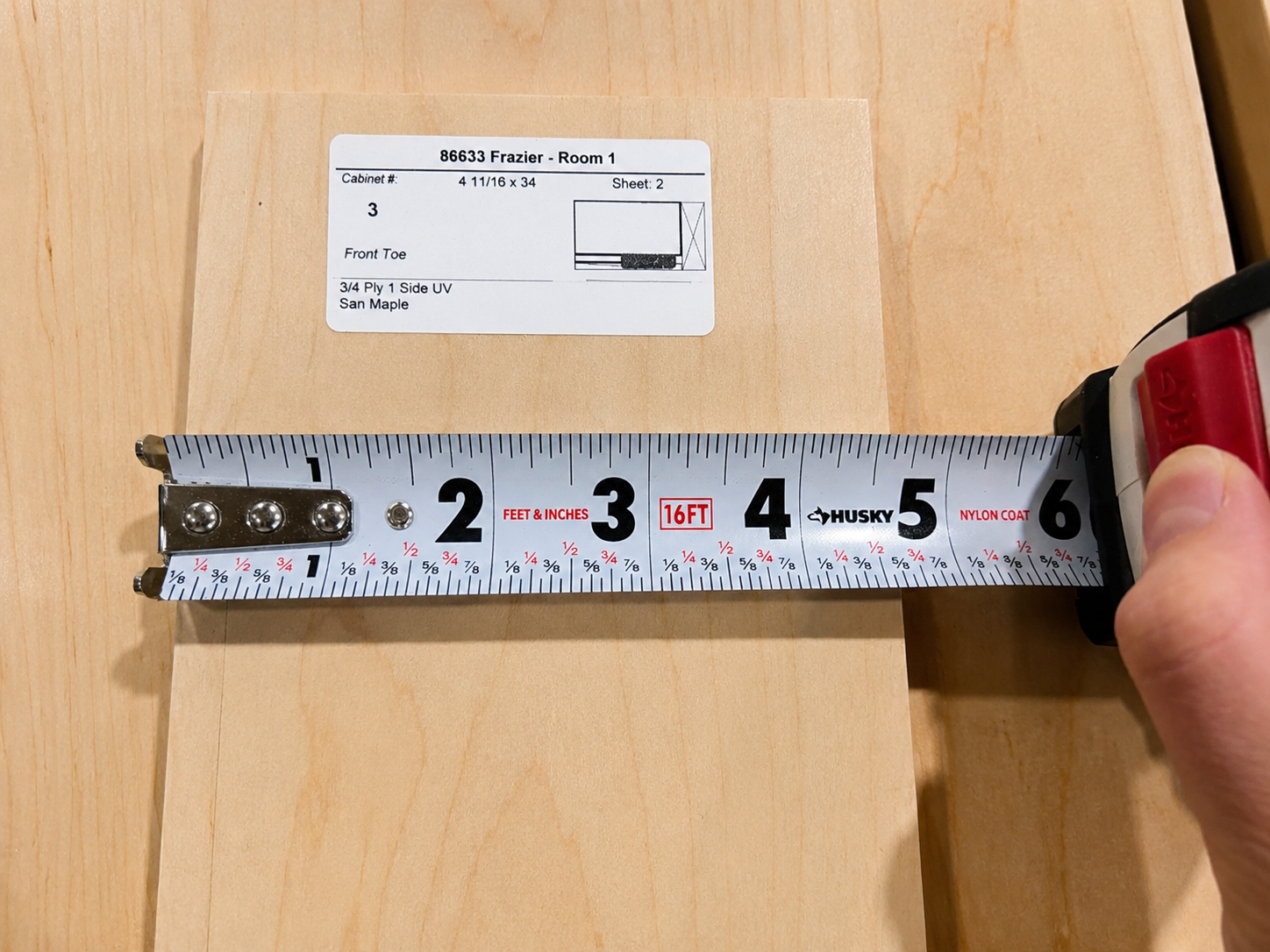
A 1/16-inch tolerance means the component is manufactured close enough to the submitted dimensions that the installer is not forced to rebuild the job in the field.
For contractors, that matters because cabinetry is not one part. It is a system.
A cabinet box affects the adjacent cabinet. The adjacent cabinet affects the appliance opening. The appliance opening affects the panel layout. The panel layout affects the reveal. The reveal affects the finished look. The drawer box affects the slide clearance. The door affects the overlay. The end panel affects the visible line.
One small sizing issue can move through the whole run.
That is especially true in:
- Wall-to-wall cabinet runs
- Island backs and waterfall ends
- Appliance openings
- Multifamily repeat units
- Commercial millwork packages
- Frameless European-style cabinetry
- Replacement drawer box projects
- Punch-list component replacement
- Jobs where another supplier missed or mis-sized a part
A cabinet that is 1/8 inch off may not sound like much on paper. On site, it can mean recutting, shimming, reworking a filler, adjusting a reveal, or holding another trade.
A cabinet held to a 1/16-inch tolerance is built for the measurement you submitted, not rounded into a standard catalog size.
That is the difference between “we can make it work” and “it fits.”
Made to Spec vs. Made to Stock
| Jobsite Issue | Made to Stock Risk | Made to Spec Advantage |
|---|---|---|
| Non-standard opening | Installer adapts with fillers or field modification | Component is built to the submitted width, height, and depth |
| Tight schedule | “Close enough” can create install delays | Accurate sizing reduces field rework |
| Appliance layout | Stock increments may force layout compromise | Openings can be built around the actual appliance schedule |
| Frameless cabinetry | Reveal issues are more visible | Precision sizing supports cleaner lines |
| Replacement drawer boxes | Standard boxes may not match slide clearances | Drawer boxes can be sized to the opening and hardware |
| Multifamily or commercial repeat work | Small errors repeat across units | Specs can be repeated consistently |
| Punch-list work | Stock part may require modification | Replacement component is made for the actual condition |
Made to stock can be useful when speed is the only requirement and the design has room to absorb standard sizing. But when the project has defined dimensions, visible finish requirements, and an install date that cannot move again, made to spec is usually the safer schedule decision.
Precision Is Speed
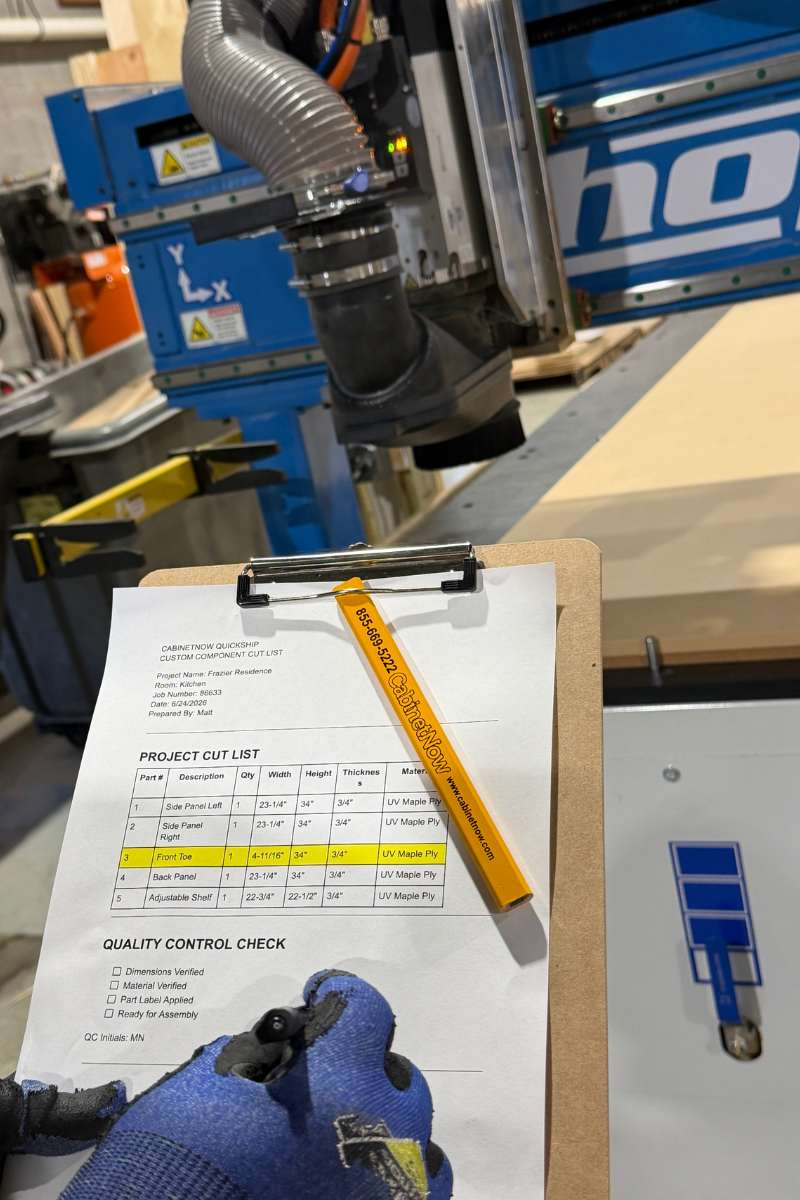
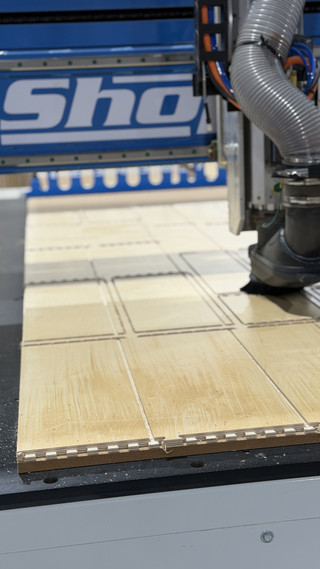
A CabinetNow team member reviews a custom cut list before CNC production, helping ensure cabinet components are manufactured to exact specifications and ready for installation.
A lot of cabinet suppliers talk about fast turnaround. Speed matters, but speed without precision can move the problem from the shop to the jobsite.
That does not help the contractor.
If a cabinet ships fast but requires field modification, the time was not saved. It was transferred to the installer.
True speed means:
- The contractor sends accurate dimensions.
- The shop manufactures to those dimensions.
- The components arrive ready for the intended install.
- The installer spends less time modifying, trimming, shimming, and reworking.
- The schedule gets back on track.
That is why tolerance matters.
A 1/16-inch tolerance is not just a machining detail. It is what allows a custom component to behave predictably in the field. It helps protect the install sequence and keeps other trades from waiting on cabinet corrections.
When the schedule is tight, precision is not slower than stock.
Precision is the thing that prevents stock from becoming slow.
Where QuickShip Fits
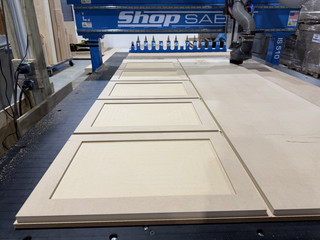
CabinetNow QuickShip is designed for contractors, builders, cabinet shops, and project teams that need custom cabinet components on an expedited schedule.
Eligible QuickShip products include:
These products are built to your specifications and manufactured to a 1/16-inch tolerance. QuickShip products are quoted fast and built on an expedited production schedule, with ship dates depending on the product type, order details, production capacity, and project size.
The practical use case is simple: when you have the measurements and the schedule is tight, send the cut list.
QuickShip is built for the moments when:
- Another supplier missed the deadline
- A cabinet package is incomplete
- A field condition changed
- A punch-list item needs a custom part
- A contractor needs boxes, doors, or drawer boxes made to actual dimensions
- A job needs to recover days, not wait weeks
The key is that QuickShip is not about forcing the project into stock sizes. It is about moving fast without giving up the fit.
Spec Breakdown: QuickShip Cabinet Boxes
For cabinet boxes, the important distinction is that QuickShip supports both framed and frameless construction, depending on project specifications.
Face Framed Cabinet Boxes
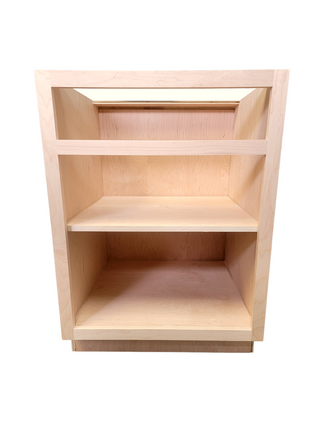
Face framed cabinetry uses traditional stile-and-rail face frame construction combined with premium plywood cabinet box construction. The QuickShip specs call out:
- Traditional stile-and-rail face frame construction
- 3/4" PureBond Paint Grade Plywood
- CARB 2 compliant construction
- 3/4" sides
- 3/4" tops
- 3/4" bottoms
- 3/4" backs
- UV maple veneer interior
- UV-cured baked-on finish
- Paint-grade hardwood face frames standard
- White oak available upon request
- 1/4" finished skins available
- Ready-to-Assemble construction
- Flat-packed shipping
- Pre-assembled option available for an additional fee
Face framed components are manufactured to a 1/16" tolerance for precise fit and installation.
For contractors, the value is straightforward: framed construction when the project calls for a traditional face frame, but built to the submitted dimensions instead of a stock cabinet schedule.
Frameless Cabinet Boxes
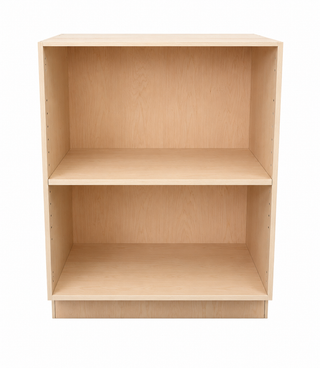
Frameless cabinetry is built for full-access European-style cabinet construction. The QuickShip specs call out:
- Full-access frameless construction
- 3/4" PureBond Paint Grade Plywood
- CARB 2 compliant construction
- 3/4" sides
- 3/4" tops
- 3/4" bottoms
- 3/4" backs
- UV maple veneer interior
- UV-cured baked-on finish
- 0.5 mm paint-grade edge banding
- Finished panels for exposed ends
- Matching finished skin required for toe kicks
- Ready-to-Assemble construction
- Flat-packed shipping
- Pre-assembled option available for an additional fee
Frameless cabinets are also manufactured to a 1/16" tolerance for precise fit and installation.
That tolerance is especially important in frameless work because the finished look depends heavily on consistent lines, clean reveals, and accurate panel alignment.
Spec Breakdown: QuickShip Dovetail Drawer Boxes

Drawer boxes are one of the clearest examples of why made-to-spec matters.
A drawer box is not just a wood box. It has to work with the opening, the drawer front, the slide system, and the required clearances. If the size is off, the drawer may bind, sit proud, fail to close correctly, or require time-consuming adjustment.
QuickShip dovetail drawer boxes are built from premium Baltic Birch plywood and assembled using traditional dovetail joinery. The specs include:
- 1/2" 9-ply Baltic Birch plywood
- Dovetail joinery
- 1/4" captured bottom panel
- 1/2" bottom panels available
- Fully assembled
- Fully sanded
- Manufactured to a 1/16" tolerance
- Blumotion undermount slides
- Full-extension functionality
- Soft-close operation
- Concealed hardware
- 100 lb load rating
Drawer boxes arrive fully assembled and sanded. Blumotion undermount slides are supplied separately and installed during cabinet assembly.
For contractors, this is where made-to-spec saves time immediately. A properly sized drawer box reduces the need to modify the opening, fight the hardware, or rebuild around a stock drawer size.
Spec Breakdown: QuickShip MDF Cabinet Doors
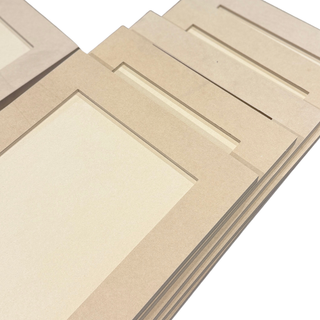
MDF cabinet doors are often the right call when the project requires a paint-grade door and the finish will be handled separately.
QuickShip MDF cabinet doors are manufactured from 3/4" Medium Density Fiberboard and designed for painted cabinetry applications. The specs include:
- 3/4" MDF construction
- Paint-grade material
- Smooth, consistent surface
- Precision CNC machining
- Manufactured to a 1/16" tolerance
- Available styles including Shaker, Slim Shaker, Raised Panel, and Recessed Panel
- Supplied unfinished and ready for paint
MDF doors are a good fit when the contractor, finisher, or project team wants control of the paint system and finish schedule.
The important schedule distinction is this: raw-for-paint MDF doors can fit the QuickShip model, but factory-painted products do not. Factory paint is not part of the QuickShip timeline and requires standard lead time.
That honesty matters. If the job needs speed, choose the product category that actually supports speed.
Spec Breakdown: QuickShip Modern TFL Slab Doors

Modern TFL slab doors are a strong option when the project needs a finished, durable, low-maintenance surface without waiting on a paint schedule.
QuickShip Modern TFL Slab Cabinet Doors are made using premium Thermally Fused Laminate panels from EGGER or Arauco. The specs include:
- Premium EGGER or Arauco TFL panels
- Slab door design
- Thermally Fused Laminate surface
- Manufactured to a 1/16" tolerance
- Durable, low-maintenance finish
- 69 EGGER finish options
- Arauco materials available
- Woodgrain textures
- Matte finishes
- Contemporary colors
- Consistent color matching
Sizing specs include:
- Minimum width: 3.5"
- Maximum width: 31"
- Minimum height: 3.5"
- Maximum height: 64"
The TFL line requires a minimum order of 10 doors per material, with exceptions possible for oversized door applications or large project orders.
For schedule-driven work, TFL can be the practical alternative to paint. It delivers a finished surface without waiting for a factory paint process.
The Paint Timeline Problem
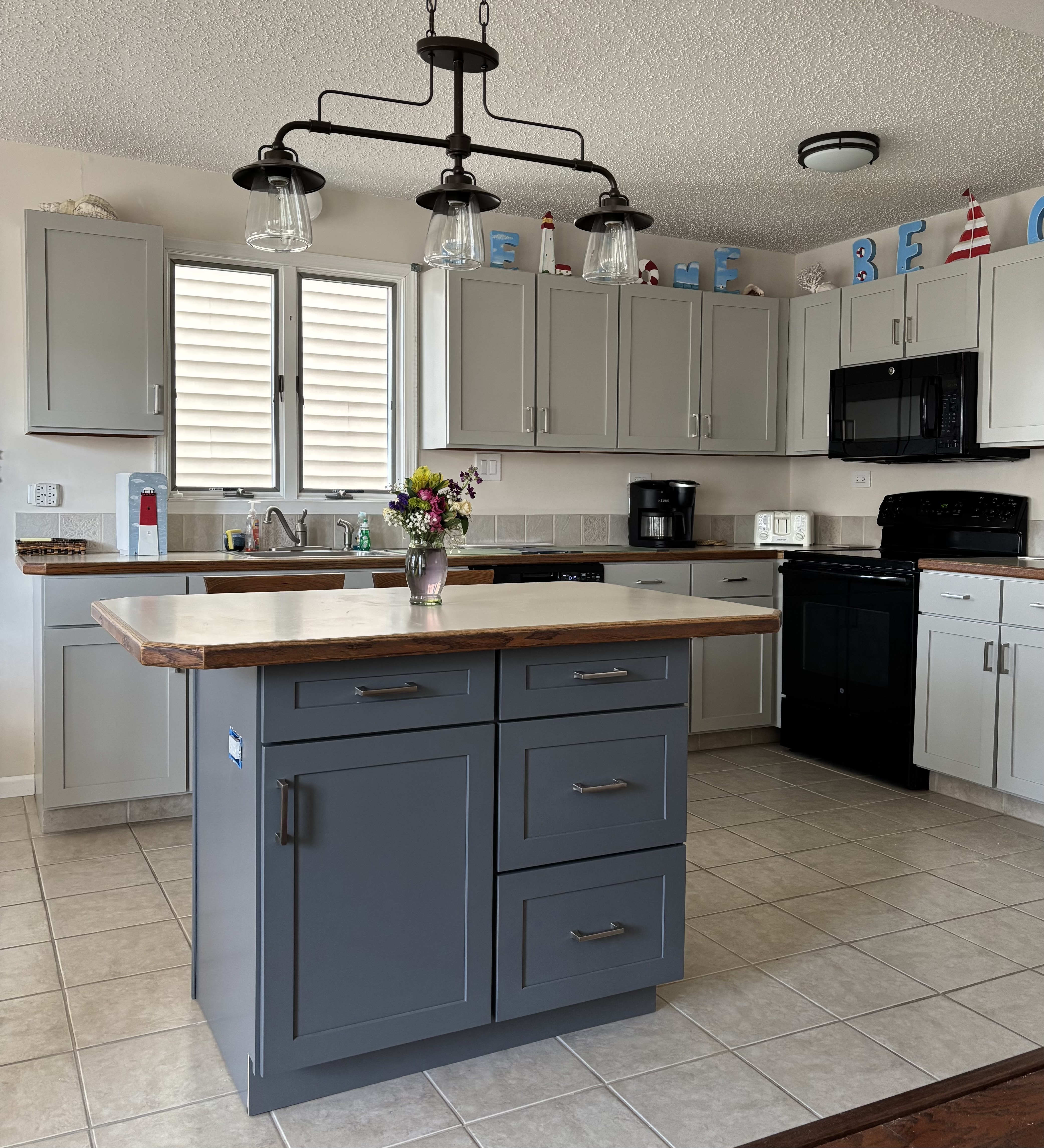
Paint is where many fast cabinet timelines get oversold.
Factory-painted products require additional production time. That is why they are not included in the standard QuickShip timeline. QuickShip is designed around prefinished, laminate, and raw-for-paint products.
That does not mean paint is wrong. It means paint needs to be scheduled honestly.
For a contractor, the decision should be based on what the job needs most:
| Project Need | Better Fit |
|---|---|
| Fastest path to installable boxes | Prefinished cabinet boxes |
| Finished modern slab doors without paint | TFL slab doors |
| Paint-grade doors with field or shop finishing | Raw MDF doors |
| Factory-painted finished product | Standard lead time, not QuickShip |
| Replacement drawer boxes | 9-ply dovetail drawer boxes |
The wrong move is pretending every finish belongs on the same timeline. It does not.
When a job is behind schedule, the supplier should tell you what can actually move fast and what cannot.
What Contractors Should Send for a Fast Quote
The faster the information is complete, the faster the quote can be accurate.
For QuickShip review, send:
- Cut list
- Cabinet schedule
- Dimensions
- Materials
- Quantities
- Door and drawer requirements
- Construction preference: framed or frameless
- Finish direction: prefinished, laminate, raw-for-paint, or factory paint
- Project notes
- Drawings or plans, if available
- Required ship timing or install date
CabinetNow’s QuickShip FAQ specifically calls out that the more complete the information is, the faster the team can quote accurately.
This is also where made-to-spec beats made-to-stock. A stock order starts with what sizes are available. A made-to-spec quote starts with what the job actually needs.
When Made to Stock Still Makes Sense
Made to stock is not automatically wrong.
It can make sense when:
- The layout is flexible
- The design can absorb fillers
- The project is not schedule-sensitive
- The finish requirements are basic
- The opening sizes match standard increments
- The installer has time to adapt on site
But when the layout is fixed, the schedule is compressed, and the cost of field modification is high, stock sizing can create more work than it saves.
That is the real question contractors should ask:
Are we saving time by ordering stock, or are we moving the time burden to the installer?
If the answer is the second one, made to spec is the better recovery move.
When Made to Spec Is the Better Call
Made to spec is usually the better choice when:
- You are behind schedule
- The field dimensions are already known
- You need a clean fit with fewer fillers
- A stock size would require modification
- The install affects other trades
- The cabinet package is incomplete
- The project involves frameless cabinetry
- The drawer boxes must match specific slide clearances
- The owner or GC will not accept visible compromises
- You need replacement parts that match the actual job condition
Made to spec is not just about customization. It is about reducing uncertainty.
On a normal schedule, uncertainty is annoying. On a blown schedule, uncertainty is expensive.
The Contractor's Bottom Line
A cabinet that almost fits is not fast.
Fast is when the component arrives built to the numbers you sent.
Fast is when the installer can install instead of modify.
Fast is when the cabinet package keeps countertop templating, appliance installation, and punch-list closeout moving forward.
When the schedule is already tight, precision is what saves the day.